On December 5th, at the invitation of Associate Professor Qin Bingtao, Director of the the Institute for China Neighboring Economies (ICNE), Zhang Zhihui, Chief Researcher of Hefu Family (Shanghai) Co., Ltd. and Chief Consultant of China Century Overseas Investment Group, delivered a speech themed New Landscape of Chinese Intelligent Manufacturing Enterprises' Global Expansion Amid International Economic and Trade Changes. The lecture was hosted by Qin Bingtao, with the participation of relevant faculty members and students from the institute.
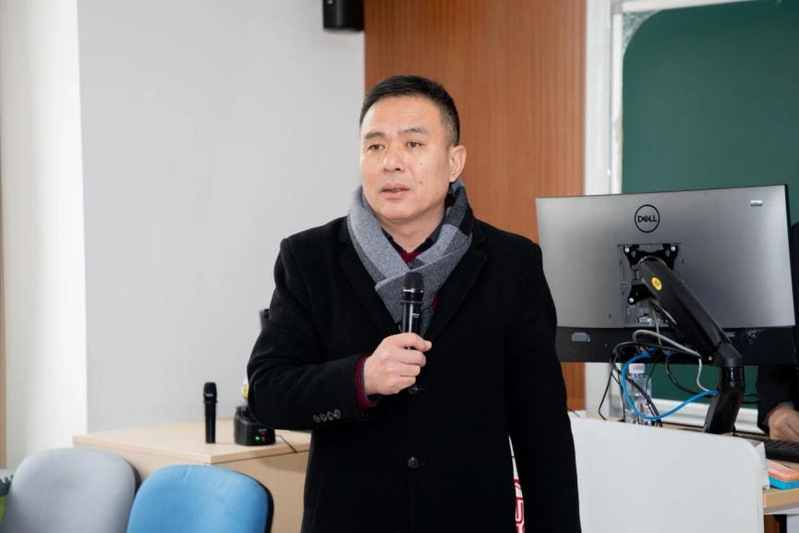
Qin Bingtao Hosting the Lecture
In his speech, Zhang Zhihui elaborated around the core viewpoint that no global expansion means elimination; no technological innovation means no future. He pointed out that against the backdrop of profound adjustments in the global landscape and increasingly fierce international competition, proactive global expansion and adherence to technological innovation are no longer optional for enterprises, but rather crucial paths related to their survival and development. Citing relevant data, he clarified the significant role of global expansion in helping enterprises break through the limitations of the domestic market and explore new growth spaces. Combining recent international hot issues such as the Israel-Palestine conflict and China-US trade frictions, he further analyzed the impact on the global industrial chain, emphasizing that geopolitics and supply chain security have become key issues that enterprises must attach great importance to in the process of going global.
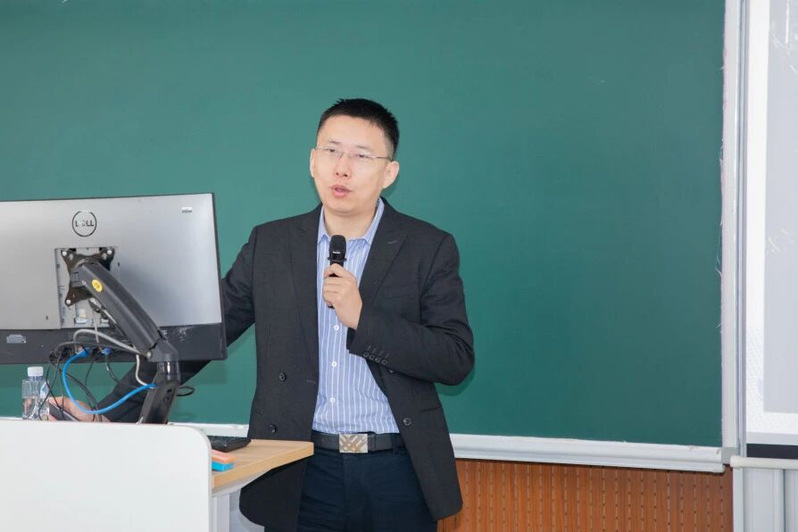
Zhang Zhihui Delivering the Speech
Focusing on the new pattern of international economy and trade, Zhang Zhihui interpreted it through three key words: Restructuring, Game, and Transformation. He stated that the global economy is gradually shifting from a single globalization to regionalized and diversified restructuring, with regional trade agreements such as the Comprehensive and Progressive Agreement for Trans-Pacific Partnership (CPTPP) continuously shaping a new international rule system; international games are increasingly focusing on technological dominance and the formulation of green standards, and compliant operation as well as fiscal and taxation management have become the basic support for enterprises' cross-border expansion; industrial development is gradually shifting from efficiency-driven to equal emphasis on green security and localized manufacturing. Against this background, Chinese enterprises are not only facing challenges such as deglobalization and escalating trade barriers, but also embracing four major opportunities: the rise of the digital economy, the emergence of emerging markets, the advancement of technological revolution, and the expansion of international cooperation space.
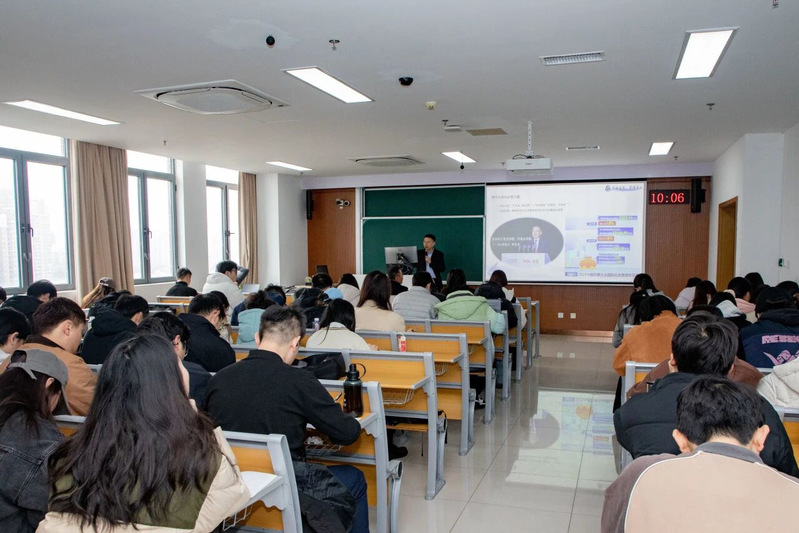
Lecture Scene
When talking about the practice of global expansion of private manufacturing enterprises, Zhang Zhihui systematically sorted out the evolutionary path from product export to brand globalization and then to ecosystem internationalization. Taking enterprises such as CATL, Haier, and Yida Group as examples, he elaborated on their successful experiences in technological innovation, localized layout, and flexible production. For instance, CATL has built technological barriers through global patent layout and occupies a dominant position in the international market; Haier has achieved integrated localized operations covering R&D, manufacturing, and marketing, with the localization rate of middle management in its overseas factories exceeding 90%; Yida Group has successfully responded to changes in the international market through strategic transformation and cross-border e-commerce layout. He emphasized that facing the new situation, enterprises should actively build a China+N global manufacturing network, and systematically promote technological R&D, supply chain construction, and localized operations to enhance their comprehensive international competitiveness.
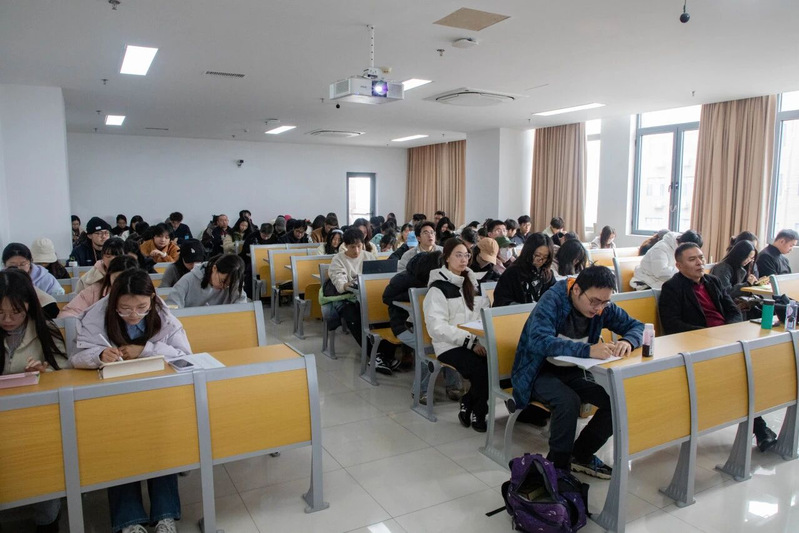
Lecture Scene
Regarding the talent demand in the context of globalization, Zhang Zhihui pointed out, combined with the actual situation of enterprise recruitment, that overseas talents in the new era need to possess an international perspective, cross-cultural communication skills, global compliance awareness, and digital literacy. He encouraged college students to consolidate their professional foundation, actively participate in university-enterprise cooperation and international exchanges, accumulate cross-border practical experience, and strive to grow into outstanding talents capable of adapting to global competition.
In his summary, Associate Professor Qin Bingtao stated that the global expansion of Chinese enterprises is an inevitable trend of economic globalization, and it also provides a broad career development platform for young students. He encouraged students to broaden their international horizons, change their ways of thinking, and continuously improve their core competencies to adapt to global competition through lifelong learning.
Through in-depth yet accessible analysis and case interpretations, this lecture not only deepened the on-site faculty and students' understanding of the current international economic and trade pattern and industry trends, but also further inspired their thinking about career development paths, providing practical references and insights for them to seize the opportunities of the times and optimize their academic and career planning.
Relevant Introduction
Zhang Zhihui holds a Master of Business Administration (MBA) degree from Fudan University, and professional qualifications as a Registered Financial Planner (RFP) from the United States and a Trust and Estate Practitioner (TEP) from the United Kingdom. He has long been engaged in the field of Chinese enterprises' internationalization strategies and cross-border equity, fiscal and taxation matters, with more than 15 years of professional experience. He has successively served as Vice President of FPP Group (USA), Director of International Business at Harmonious Capital (USA), and Investment Director at Hejun Capital. Currently, he serves as Chief Researcher of Hefu Family (Shanghai) Co., Ltd. and concurrently as Chief Consultant of China Century Overseas Investment Group, continuously providing in-depth research and practical solutions for enterprises' global layout and asset structure.